The New Freight Reality: Why Your Carrier Network Is Your Competitive Advantage
The freight industry has always operated in a world of variables. That much hasn't changed. What has changed, fundamentally and perhaps permanently, is the speed at which those variables collide, and the degree to which a single event can ripple across every mode, lane, and tier of your supply chain simultaneously.
Tariff shifts. Port congestion. Intermodal backlogs. Carrier capacity tightening just as demand surges. These aren't isolated incidents anymore. They're the operating environment. And in this environment, the question isn't whether your supply chain will face pressure, it's whether your partnerships are built to absorb it.
At ARL Network, we've been moving the products of this nation since 1978. We've seen market cycles, capacity crunches, recessions, and recoveries. And after nearly five decades, we've arrived at a conviction that grows stronger with each disruption: the shippers who win long-term are the ones who invest in carrier relationships before they need them, not after.
Not All Disruptions Are the Same, And Your Response Shouldn't Be Either
One of the most important distinctions in freight strategy is understanding the nature of the disruption in front of you. We see three categories that demand fundamentally different responses:
Structural Disruptions
These are the events that permanently alter how supply chains are engineered. COVID-19 was the defining example of a generation. These disruptions don't resolve, they reset. They require shippers to rethink sourcing geography, rebuild inventory strategy, and rebalance the trade-off between cost efficiency and operational resilience.
Acute Disruptions
Port labor actions, weather events, sudden lane closures. These are high-intensity but short-duration. They don't require you to rebuild your supply chain, they require you to react fast. The advantage here belongs entirely to shippers who have pre-negotiated contingency routing and carrier commitments already in place. When the clock is running, there's no time to build relationships from scratch.
Sustained Uncertainty
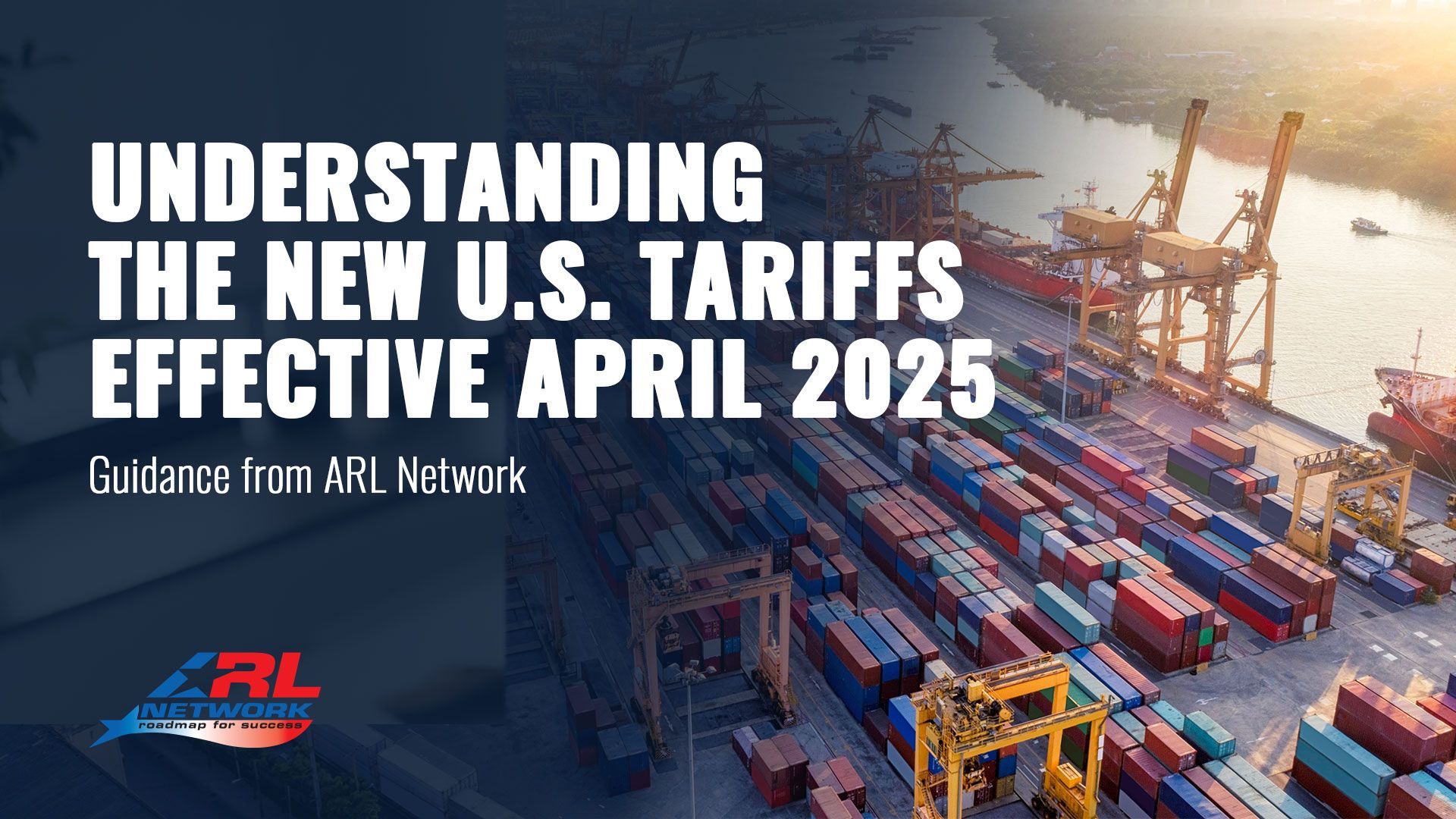
This is the category that most shippers are navigating right now, and it's the most strategically demanding. Trade policy volatility, shifting tariff structures, ongoing import/export complexity. These situations aren't temporary detours. They're a new operating baseline that demands active, ongoing management rather than a one-time pivot.
Understanding which type of disruption you're facing is the first step toward responding to it intelligently. The second step is ensuring your carrier network is structured to move across all three.
Capacity Is a Relationship, Not a Commodity
There's a persistent misconception in freight procurement: that capacity is a market commodity, available to whoever pays the right rate at the right moment. In a stable market, that assumption holds. In a constrained one, it collapses.
Carriers don't distribute scarce capacity randomly. They allocate it strategically, to the partners who offer them consistency, transparency, and long-term value. Shippers who have spent years treating freight as a transaction discover this the hard way when markets tighten. Shippers who have built genuine carrier partnerships discover they have access to capacity that the spot market simply can't provide.
This is one of ARL's core structural advantages. Our agent-based network, spanning 40+ terminals across the United States, operating 900+ trucks, isn't just geographic coverage. It's a dense web of carrier relationships built over decades, maintained through consistent volume, clear communication, and the kind of reliability that earns preferential treatment when capacity is tight.
For our shipper partners, that translates into something that doesn't show up on a rate card: stability. Not just today's load covered, but next quarter's freight protected.
The Hidden Cost of Fragmentation
Many shippers have responded to market complexity by adding more vendors, more brokers, more point solutions. The logic seems sound: more options equals more flexibility. In practice, it often produces the opposite.
Fragmented freight management dilutes accountability. When a shipment is delayed, who owns the problem? When a lane tightens, who has the authority and the carrier relationships to reroute? When leadership needs a consolidated view of freight performance, where does that data live?
Fragmentation also erodes carrier loyalty. Carriers allocate their best capacity to partners who offer them steady, predictable freight, not to shippers whose volume is spread across a dozen brokers and four different TMS platforms. When the market tightens, fragmented shippers find themselves competing on spot rates for capacity that their consolidating competitors secured weeks earlier at contracted prices.
The alternative is a single point of contact model, one partner with nationwide coverage, centralized accountability, and the carrier relationships to execute across dry van, flatbed, drayage, and intermodal. One partner who has a stake in your supply chain's long-term performance, not just today's transaction.
Technology Serves Strategy, Not the Other Way Around
The freight industry has seen an enormous wave of technology investment over the past decade. Load boards, TMS platforms, visibility tools, predictive analytics. Much of it is genuinely useful. Some of it has been oversold.
The shippers navigating this environment best haven't necessarily adopted the most sophisticated technology. They've adopted technology in service of a clear strategic framework, one built on strong carrier relationships, centralized accountability, and genuine supply chain flexibility. Technology accelerates a good strategy. It cannot substitute for one.
At ARL, our technology investments reflect this philosophy. Our customer tracking capabilities, EDI and API integration options, and quoting and load-building tools are designed to create transparency and reduce friction, for our shipper partners, for our agents, and for our carrier relationships. The goal isn't a dashboard for its own sake. It's operational clarity that enables faster, better decisions when the market demands them.
What Resilience Actually Looks Like
Supply chain resilience has become an overused term. It's worth being specific about what it actually requires in today's freight environment.
- Mode diversity across dry van, flatbed, drayage, and intermodal, not as a fallback, but as a standard operating capability.
- Geographic network depth so that a regional disruption doesn't become a national one.
- Carrier relationships that survive market stress, built on consistency and trust, not just competitive rates.
- A single accountable partner who owns outcomes, not just executes transactions.
- Visibility that converts to action, not just data, but the expertise to act on it before disruption escalates.
These aren't aspirational characteristics. They're operational requirements for any medium-to-large shipper competing in today's environment.
A Partnership Built for the Long Game
ARL Network was founded on a principle that has never stopped being true: everyone in the supply chain is our customer…Shippers, Carriers, and Agents. When every relationship in the network is treated with the same level of respect and accountability, the result is a unified system that performs, not just in favorable conditions, but in the ones that test you.
We are not a transactional company. We are a long-term partner for shippers who understand that supply chain performance is a competitive differentiator, and who want a transportation network that reflects that conviction.
Ready to build a freight strategy built for uncertainty? Contact us to learn more.
TALK TO US!